The New Furry VIPs - Paws on deck
Charter brokers say requests for pet-friendly yachts are rising, while designers are rethinking interiors with tougher fabrics, shaded deck zones, and even artificial-grass “dog loos.”
Aug 30, 2025
The new furry guest
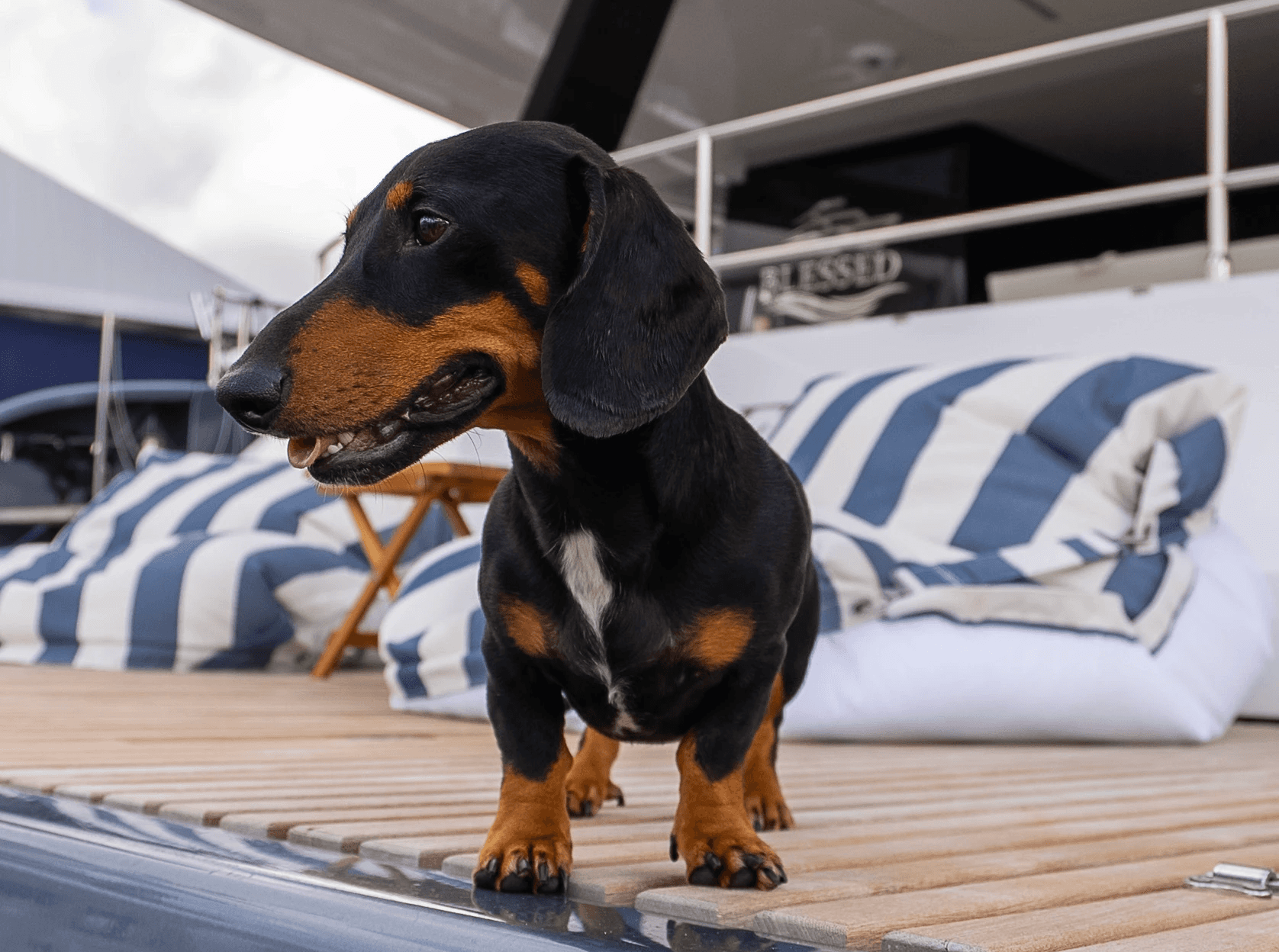
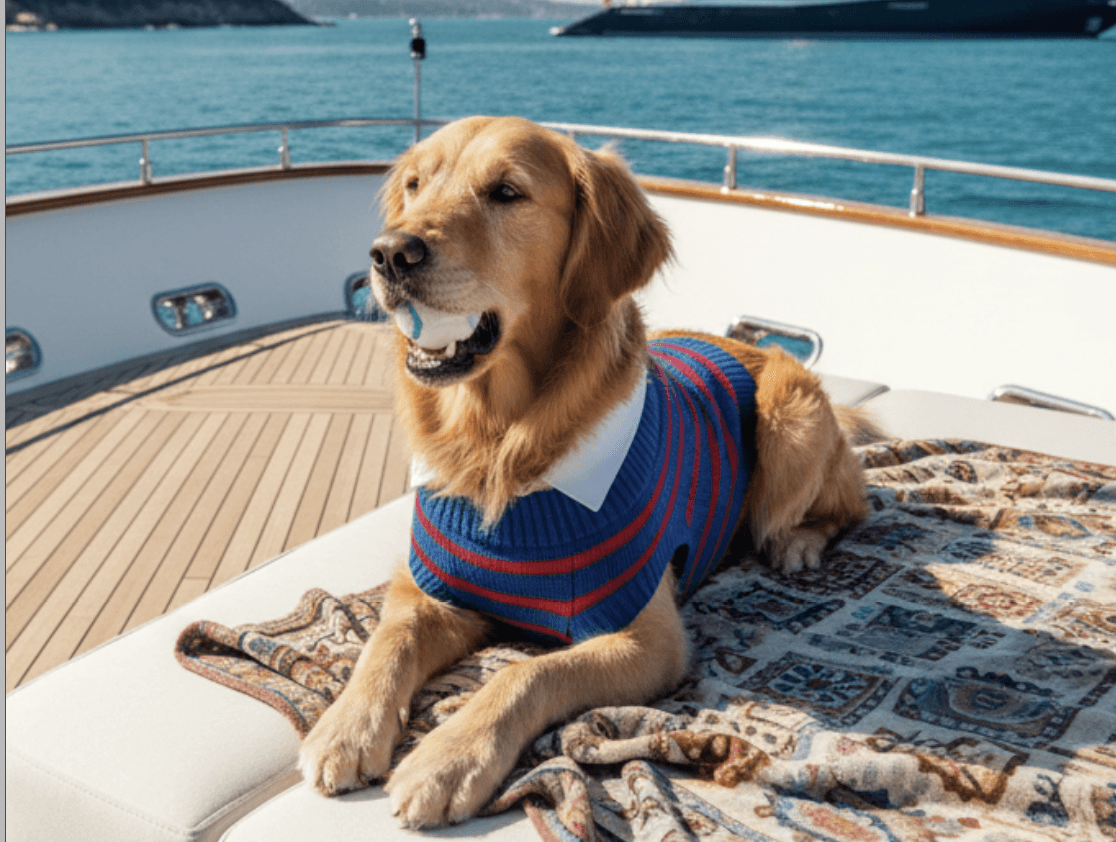
For many yacht owners, family now means the whole pack—including four-legged companions. Increasingly, dogs are part of the superyacht scene: trotting across teak decks, bounding into tenders for a quick hop ashore, or dozing in the sun while guests linger over lunch. What once raised eyebrows is now almost expected.
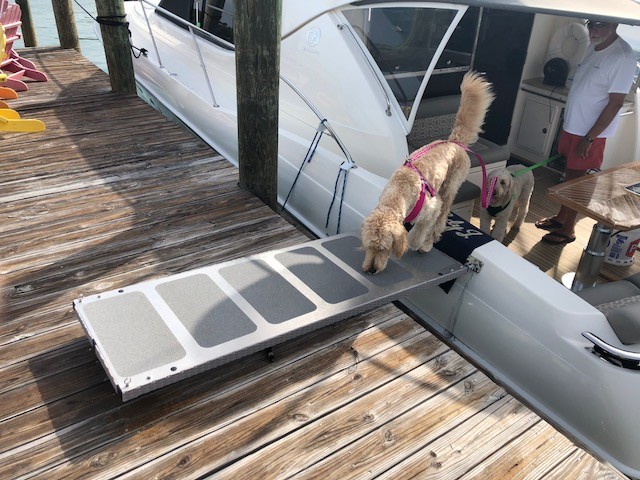
The numbers back it up. Analysts put the global pet travel services market at $2.4 billion in 2024, with forecasts pushing close to $4 billion by 2030. Pets are no longer “add-ons”—they’re family members, and they travel accordingly. Yachting is already adapting. Charter brokers say requests for pet-friendly yachts are rising, while designers are rethinking interiors with tougher fabrics, shaded deck zones, and even artificial-grass “dog loos.” Refit lists now include boarding ramps and ladders designed just for dogs, making shore runs less of a scramble. What started as an indulgence is quickly becoming part of the blueprint.
Bark Air and the New Luxury Standard
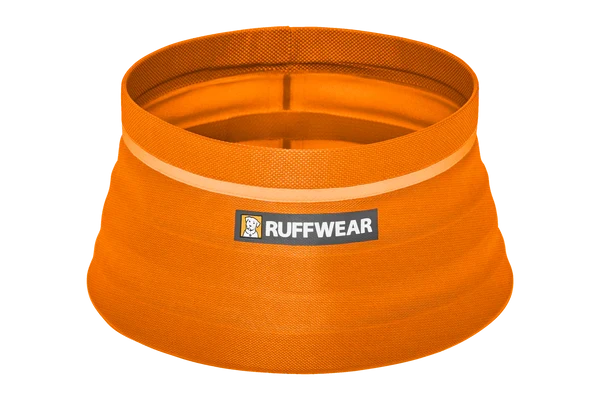
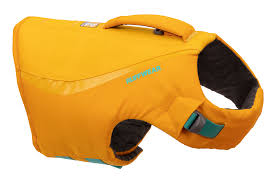
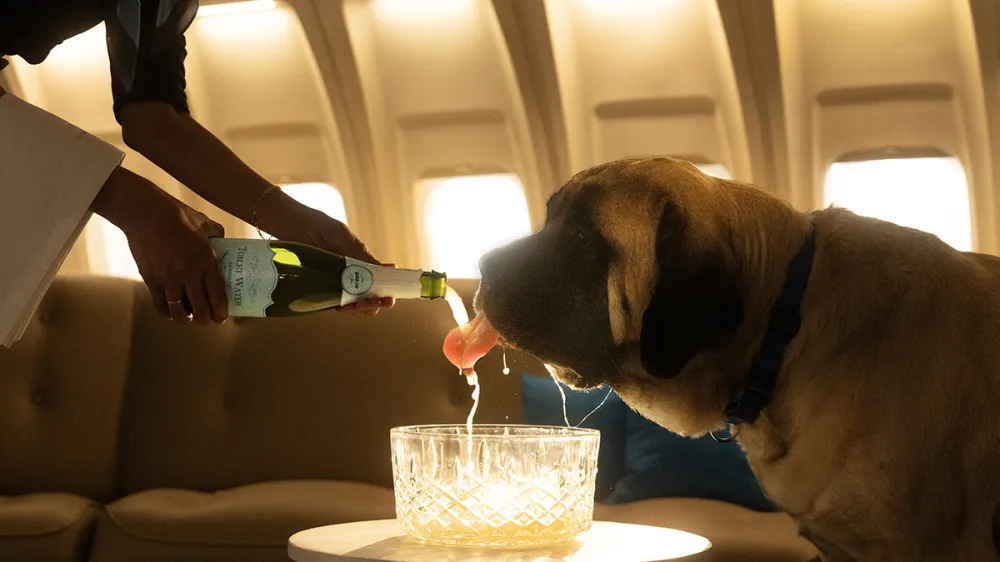
Perhaps the clearest signal of this shift comes from the skies. BARK Air, launched in 2024, flew more than 1,000 dogs on 142 flights in its first year and generated close to $6 million in revenue. Its promise of a “dog-first” private jet complete with concierge services, crate-free cabins, and stress-reducing touches has sold out routes and built a loyal following of repeat passengers. For yachts, the message is clear. If owners are going to these lengths to ensure their dogs travel comfortably, they will expect the same standards at sea. A flotation vest and a bowl of water are no longer enough; concierge-level care, thoughtful design, and seamless integration of pets into the yacht experience are now part of the luxury package.
Safety
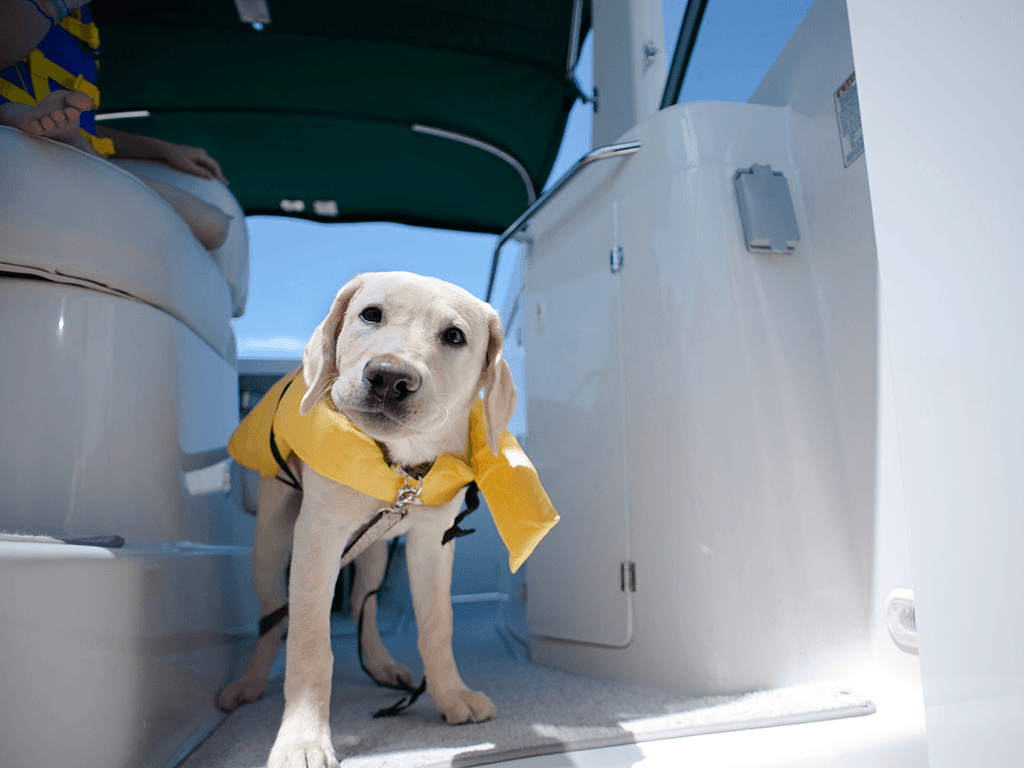
Ensure dogs wear fitted lifejackets with rescue handles and reflective strips so they can be swiftly lifted out of the water if necessary.
Use non-slip deck surfaces (rubber mats or textured teak) to reduce risk of slipping, especially around swim platforms, sterns and tender boarding areas.
Provide a secure boarding ramp or ladder suited for the dog’s size—this prevents stress or injury when entering or exiting water or tender.
Designate a ‘dog muster station’ on board: a spot where the dog knows to go when underway or in rougher conditions, with a strap or secure position.
Routine
Keep normal feeding schedules: breakfast, lunch (if onboard day trip), and dinner as usual, to maintain stability for your dog in a moving environment.
Equip the yacht with a synthetic-turf pad or tray for relief when shore landings are unavailable. Training the dog to use this ahead of cruising avoids last-minute surprises.
On departure days, allow extra time for the dog to familiarise with the yacht stationary. Familiar smells, bedding, and a calm introduction help ease them into the motion of the vessel.
Incorporate short acclimatisation sessions: before a full day at sea, do a short harbour cruise so your dog adapts to motion, noises and deck surfaces.
Crew Support
Assign clear responsibilities among the crew (or family) for feeding, hydration checks, exercise, hygiene and waste-management for the dog.
Basic pet first-aid training for one crew member: knowing how to deal with cuts, small shocks (salt water ingestion), heat stress, seasickness.
When done well, a dog onboard becomes part of the experience: morning tender rides become walks, playful swims off the stern become morale-boosters, and calm companionship brings warmth across long passages.
Create a resting zone for the dog: shade, non-slip surface, access to fresh water and a comfy bed. Ensure the area is secure when underway and the dog cannot slip or jump overboard.
Cultural Trend & Outlook
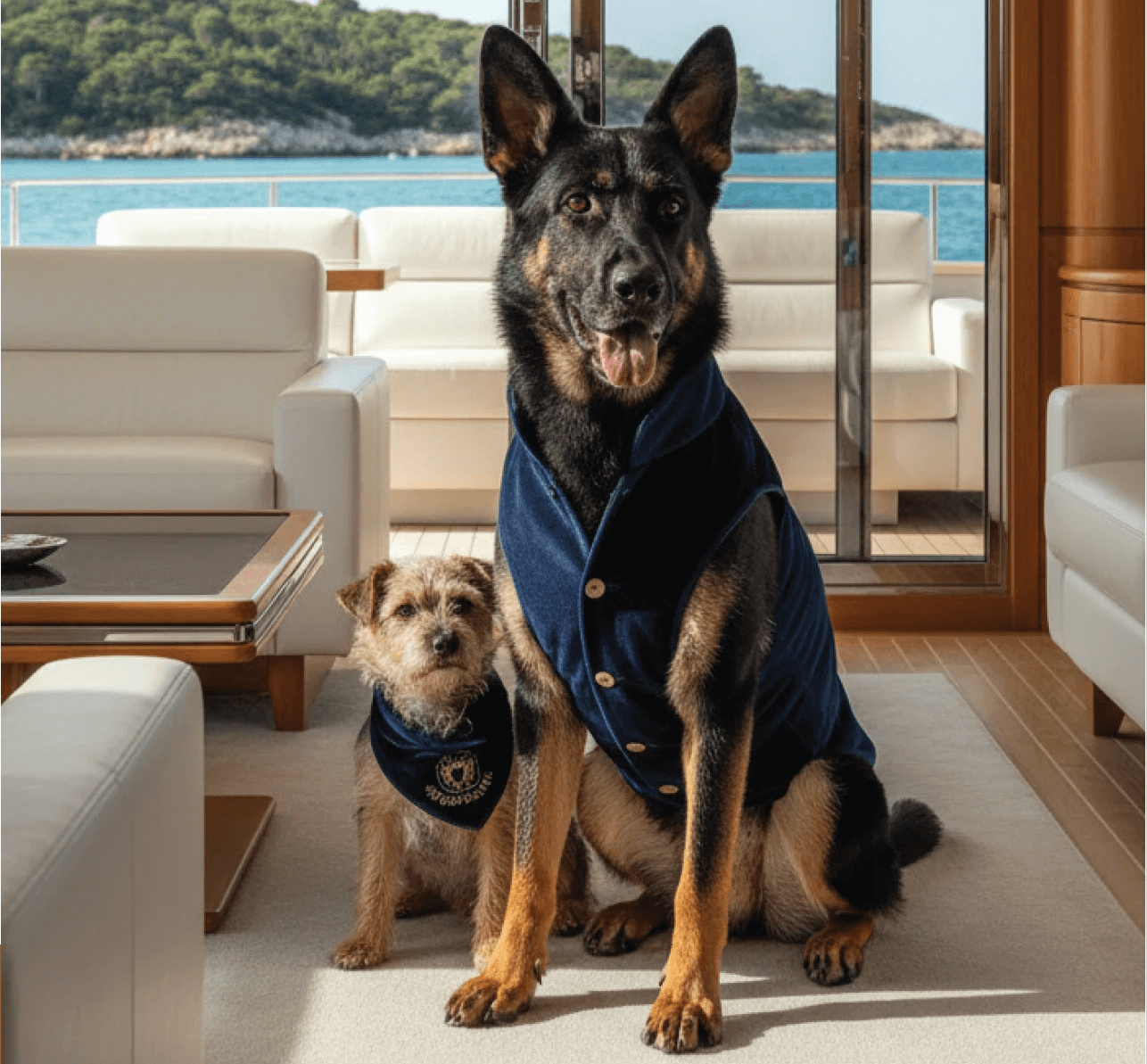
The broader trend is clear: pets are no longer “left behind”. High-net-worth families expect to travel with their dogs in comfort equal to their own. On yachts, this means careful adaptation. Boats that can promise a smooth, pet-friendly experience, complete with gear, protocols and trained crew, won’t just service a niche demand—they’ll align with what luxury means today. For many owners, the ultimate expression of home on the water now comes with a wagging tail.
Yacht designs are increasingly incorporating dedicated pet areas, non-slip zones, shaded deck retreats, onboard washing stations.
Crew training for pet-boarding is becoming a differentiator in the superyacht market.
Charter companies, especially in Mediterranean and Caribbean markets, are promoting “dog-friendly” charters to capture this growing demand.
Regulatory considerations (quarantine, travel documents, pet passports) are also shaping how guests with dogs choose destinations and vessels.
Additional Considerations
Seasickness & water acclimatisation: Just like humans, some dogs can feel seasick. Observe early signs such as panting, drooling, yawning. Start with calm, short rides.
Emergency plan: Know the dog-overboard procedure, have a looped leash, floatable lead, lithium descent float for smaller dogs.
Hygiene & boarding: Wet dogs bring salt, sand, fur. Consider dedicated rinse-down hose, drying station, and emergency clean-up after each swim.
Behaviour & safety rules: Teach commands like “stay”, “down” and “off” deck–important when moving around the yacht or working tender transfers.
Local regulations: Some countries/islands have strict pet import laws. Always check quarantine, vaccinations, and travel documents ahead of an itinerary.
Comfort & enrichment: Bring familiar bedding, toys, and a covered area where the dog can escape sun or wind. A happy dog helps maintain calm aboard.