The Great Wealth Transfer: How $124 Trillion Is Reshaping Luxury Yachting
What the largest intergenerational wealth transfer in history means for superyachts, charter, and the future of maritime luxury
Jan 12, 2026
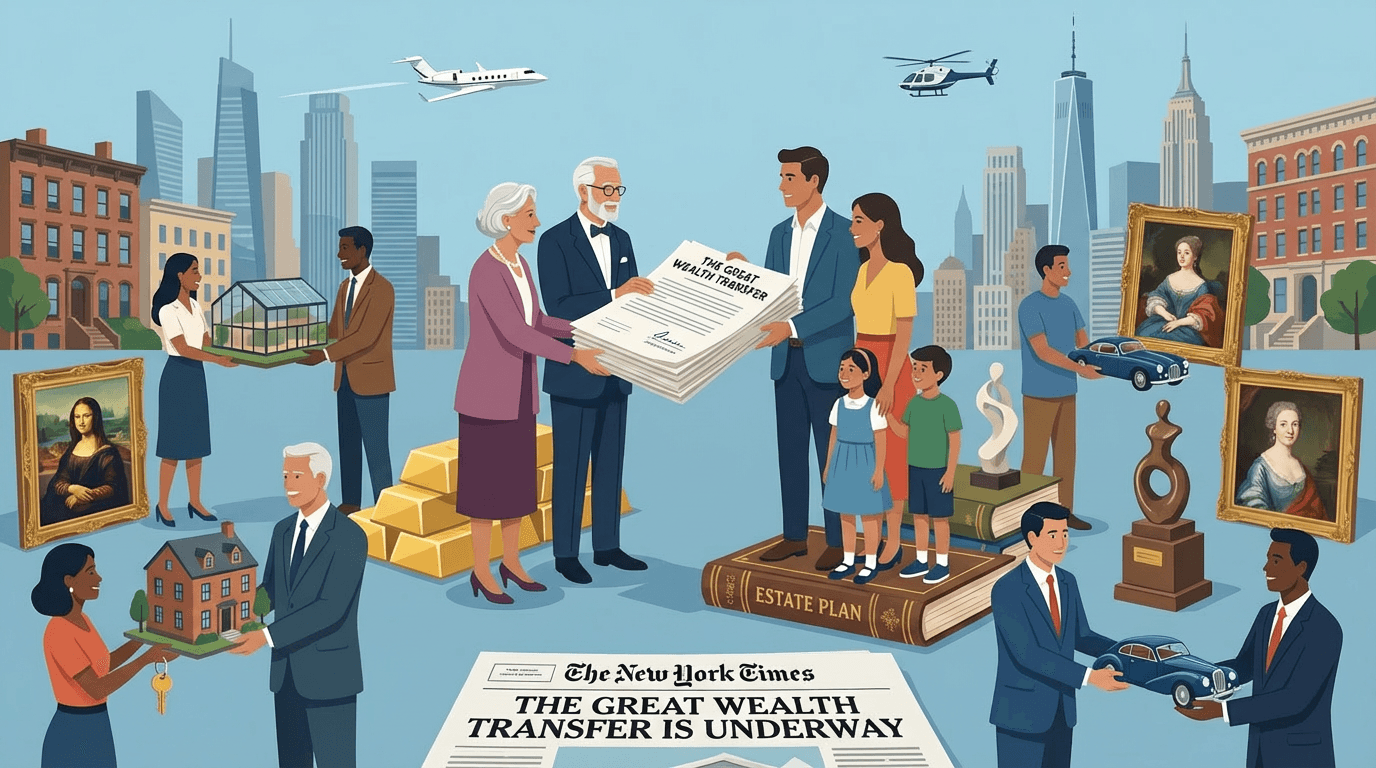
We're witnessing the largest wealth transfer in human history—and it's fundamentally reshaping how ultra-high-net-worth individuals engage with luxury. According to Cerulli Associates' 2024 research, approximately $124 trillion will flow from Baby Boomers to younger generations through 2048.
For the luxury yachting industry, this isn't merely a demographic shift—it's a complete transformation of client expectations, values, and engagement preferences. The inheritors of this wealth want fundamentally different things than their parents did.
The Scale of the Transfer
The numbers are staggering. Cerulli's research breaks down the $124 trillion as follows: $105 trillion flowing directly to heirs, with $18 trillion directed to charitable causes. Millennials stand to inherit $46 trillion—the largest share of any generation—while Gen X will receive $39 trillion and Gen Z approximately $15 trillion.
What makes this particularly significant for the luxury sector is the concentration at the top. More than half of this transfer—approximately $62 trillion—originates from ultra-high-net-worth and high-net-worth households. That's just 2% of all households controlling the majority of this wealth movement.
The UBS Billionaire Ambitions Report 2025 found that billionaires alone will transfer approximately $6.9 trillion by 2040. In 2025, 91 heirs inherited a record $297.8 billion—36% more than 2024, despite fewer individuals inheriting overall. The youngest heir? A 19-year-old from a German pharmaceutical family.
Key insights
$124T Total wealth transferring through 2048 - Cerulli Associates
$46T Millennials' share—the largest of any generation
81%Of heirs plan to switch their parents' wealth manager
$297.8BRecord inheritance by 91 heirs in 2025 (+36% YoY
"These heirs are proof of a multi-year wealth transfer that's intensifying. The rise of a new generation of wealth creators and inheritors is reshaping the global landscape."— Benjamin Cavalli, Head of Strategic Clients, UBS Global Wealth Management
Experiences Over Ownership: A Fundamental Shift
Perhaps the most significant change in next-generation luxury preferences is the decisive pivot from ownership to experience. Bain & Company's 2024 Luxury Market Study found that experiential luxury is growing at twice the rate of tangible luxury goods.
This isn't speculation—it's reflected in spending patterns. McKinsey research indicates that 76% of luxury consumers now prioritise exceptional experiences over material possessions. Experience-focused luxury hospitality spending is projected to reach $391 billion by 2028, according to Assembly's New Codes of Luxe Report.
For yachting, this represents both a challenge and an opportunity. The younger generation doesn't necessarily aspire to own a 60-metre superyacht that sits in a marina 48 weeks per year. Instead, they want access to extraordinary experiences—curated itineraries, adventure destinations, wellness programming at sea, and cultural immersion. They want the yacht to be a platform for living, not a status symbol.
SuperYacht Times reports that the average age of superyacht owners has dropped by 10-15 years over the past two decades, with projections suggesting it will fall further to between 35-45 over the next decade. But their relationship with ownership is evolving—flexible usage models including co-ownership, charter membership clubs, and yacht-sharing platforms are gaining significant traction.
Sustainability Is Non-Negotiable
For inheritors, sustainability isn't a nice-to-have—it's a baseline expectation. According to the Morgan Stanley Institute for Sustainable Investing, 82% of investors aged 24-43 consider a company's ESG track record when making investment decisions, compared to just 41% overall. A remarkable 73% of investors aged 21-42 already have exposure to sustainable assets.
This extends beyond investments to every purchasing decision. Research from McKinsey shows that 73% of Millennials and 62% of Gen Z are willing to pay a premium for sustainable products. They're scrutinising everything—from construction materials in shipyards to carbon emissions from onboard systems.
The UBS report found that 60% of young investors would rather inherit wealth with a purpose than simply receive a lump sum. They want their money to mean something.
The Wellness Revolution at Sea
McKinsey values the global wellness market at over $2 trillion, with the US alone representing more than $500 billion in annual spend growing at 4-5% annually. But this isn't your grandmother's spa day.
Private wellness clubs are proliferating across London, New York, Los Angeles, and Dubai, charging anywhere from $350 to $10,000 per month. According to Fortune, they're packed with Millennials willing to invest significantly in their physical and mental wellbeing.
"Wellness has now become less of an 'I'm interested in wellness' to a lifestyle choice. Millennials have really put their health and wellness at the forefront and have the financial means to participate in these spaces."— Zack Bates, Private Club Marketing (via Fortune)
The Business of Fashion reports that "soft clubbing" or "wellness clubbing" is replacing traditional nightlife. Gen Z and Millennials are drinking less, prioritising sleep, and seeking social spaces beyond cocktail bars—think silent disco fitness classes, sound bath healing workshops, and ice baths with friends.
For yachting, this translates directly into demand. The next generation wants wellness retreats at sea, yoga on deck at sunrise, onboard nutritionists, and biohacking amenities. A five-star safari might include conservation volunteering; a private yacht charter could feature marine scientists onboard. Purpose and wellness are becoming as desirable as luxury trappings themselves.
The Loyalty Challenge
Here's the statistic that should concern every wealth manager and yacht broker: 81% of inheritors plan to switch wealth management firms within two years of inheritance. UBS found that up to 90% of heirs leave their parents' wealth manager entirely.
The reasons are consistent: lack of connection, outdated client experiences, and failure to understand their priorities. The next generation expects transparency, personalisation, digital tools, and values alignment. Treating them the way their parents were treated is a reliable path to losing them.
Cerulli Associates found that developing relationships with clients' spouses and children is now the top long-term growth strategy among high-net-worth practices. Family meetings and regular communication among family members is considered a key best practice by 89% of firms.
"Eventually, most of the wealth owned by older generations in the U.S. will be either donated or passed down to Gen X or Millennial heirs. Providers that can establish relationships with, and adequately address the needs of, these younger investors will be well positioned for success."— Chayce Horton, Senior Analyst, Cerulli Associates