From Ownership to Access: Why fractional flying Is outpacing private jet sales
Today’s flyers don’t just want luxury — they want smart luxury. They want access that feels personal, not positional.

Jan 6, 2026
For decades private aviation has been a high-touch symbol of success — the invisible red carpet rolled out for billionaires and captains of industry. But in 2025 something interesting happened: instead of buying a whole jet, more and more high-net-worth flyers have been choosing fractional ownership, memberships, and flexible access programs as their first ticket to the sky.
Today’s flyers don’t just want luxury — they want smart luxury. They want access that feels personal, not positional.
The Numbers Tell a New Story
Recent data shows fractional ownership isn’t just a niche trend — it’s growing at an eye-catching clip:
Over the past five years, search behaviour has tilted toward access models. One 2020–2025 analysis reports fractional ownership interest rising 67% year-over-year, reinforcing the shift away from all-in ownership.
On top of that, fractional flight activity is driving growth in the U.S. private jet market, with fractional departures up 10.3% in the first half of 2025 compared to 2024, while traditional owner flights stayed mostly flat.
According to Air Charter Service’s Annual Review 2024, first-time private charter clients rose by 27% year-on-year, signalling continued expansion of the entry-level private aviation market.
In other words: not only are more people flying privately — they’re sharing the skies in smarter, more adaptable ways.
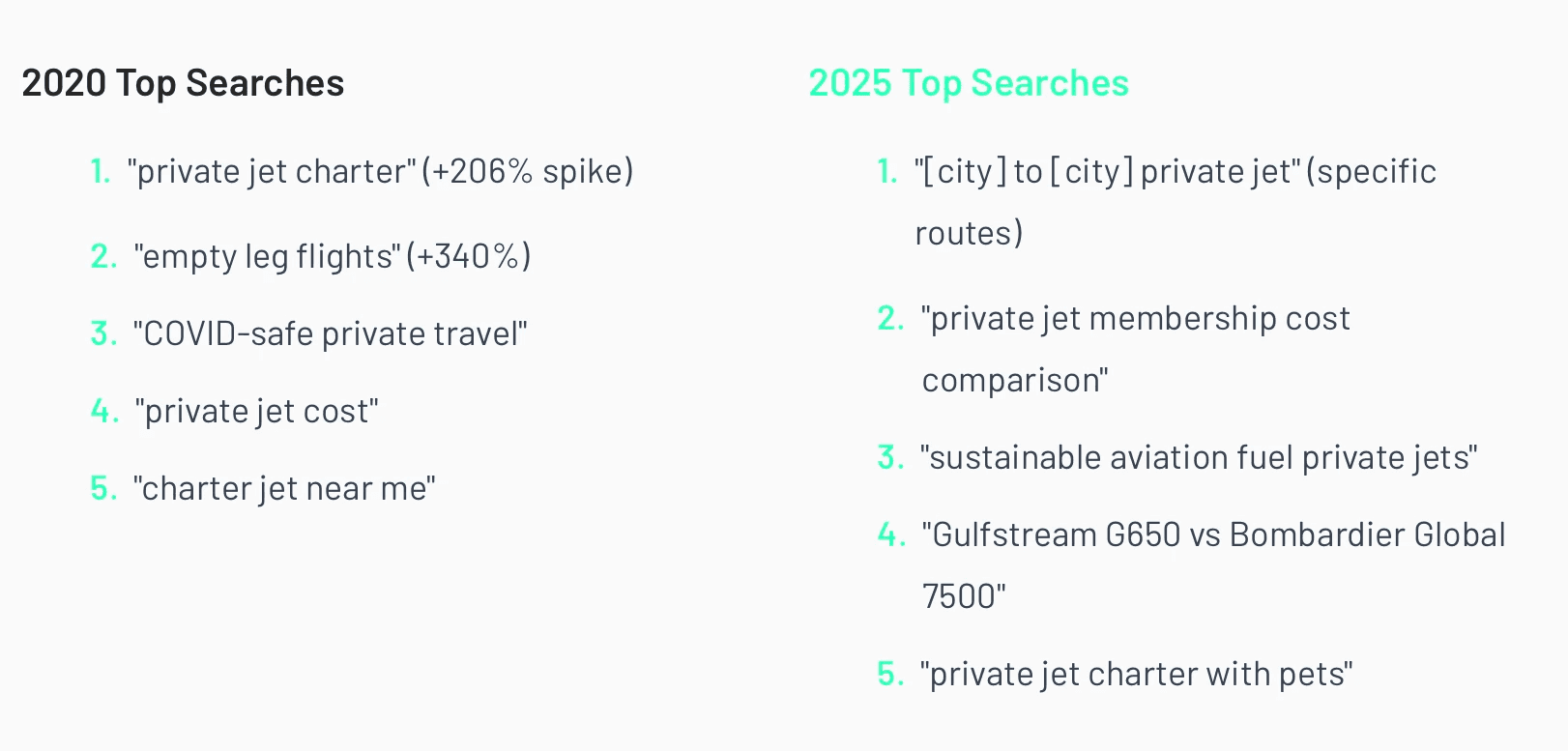
Google Search Data (2025 Source)

Why Fractional Works Better for Modern Flyers
Think about how you travel on the ground: you don’t need to own a fleet of luxury cars to live well. You use what you need, when you need it. The same mindset is now dominating private aviation.
Fractional ownership is like timesharing for jets: you buy a slice of an aircraft (often between 1/16 and 1/4 share), giving you guaranteed flight hours each year without the million-dollar overhead and operational hassle of full ownership.
This model appeals to a broader lifestyle audience:
Entrepreneurs and creatives who value time over assets
Families that want flexibility for school breaks and holiday travel
Tech founders and globalists who prioritize remote work and mobility
Luxury voyagers who rotate among yachts, villas, and private terminals
One fractional owner put it simply: “It feels like having the front-row ticket to life — without buying the whole stadium.”
A Shift from “Trophy” to “Tool”
Fractional flying isn’t framed as a compromise anymore — it’s often the more considered choice. It gives owners the benefit of private aviation without the weight of running an aircraft like a standalone business.
What that looks like in real life:
Choice of aircraft size depending on the trip (and the passenger list)
Experienced crews and operational consistency, without the personal management overhead
A travel setup that flexes easily between board meetings, weekend escapes, and those “we should go tonight” moments
It’s one reason the biggest names in the category — NetJets, Flexjet, PlaneSense and peers — continue to expand. The demand is there, and their fleets are scaling to meet it.
More Millennials, More Intentional Use
Among younger UHNW flyers, the tone has shifted. The goal isn’t to own something for the sake of owning it — it’s to make life run smoother.
This is a generation that grew up with access models everywhere else: streaming subscriptions, on-demand services, flexible memberships. So the logic of fractional flying feels familiar: pay for reliability, buy into convenience, keep the lifestyle light.
Rather than maintaining a jet that sits idle for long stretches, they’re choosing a model that behaves like a well-run service — discreet, responsive, and ready when it matters.

Real World Impact: Life Beyond the Runway
What’s interesting about the fractional flyer isn’t the aircraft spec sheet. It’s the rhythm it unlocks.
It’s St. Tropez for a long weekend without arriving wrung out from a red-eye. It’s a morning meeting in Zurich that still leaves room for dinner in London—unhurried, properly dressed, and on time. It’s a sunrise surf session that doesn’t require commercial compromises or a day lost to connections. And yes, it’s bringing the dog—calmly, comfortably, without negotiating airline rules or the stress that comes with them.
This isn’t “look at me” travel. It’s quiet control: keeping your time, your energy, and your private life exactly where you want them.
So What Does This Mean for Jet Sales?
Whole aircraft ownership isn’t going anywhere. For many principals, it still makes sense—especially when utilisation is high and operations are tightly managed.
But it’s no longer the only growth story.
Fractional access has:
expanded the market by making private aviation feel more attainable and less all-or-nothing,
reset expectations around convenience and availability,
and lowered the emotional threshold of taking the step into private flying for the first time.
In 2025, private aviation became less of a badge and more of a well-designed system—one that slips neatly into the way modern wealth actually moves: across cities, across commitments, and across generations.
Written by Claire Hagen and Ai model research model, Claire is digital consultant for UHNW clients and luxury brands, specialising in AI, creative marketing, and innovative solutions. Co-Founder of the www.armadayachtclub.com
Insta @theartofyachts @this.is.odyssey